Settle
Lilac means wind down. Quiet time, stories, and calm. Bed is coming.

Four gentle phases. Soothing audio that helps your child settle. A signal in their room that does the talking for you.

How it works
Kip glows a different colour for each part of the night, so your child always knows where they are in the routine without a word from you. The light fades gently between phases, keeping each transition soft and familiar.
Lilac means wind down. Quiet time, stories, and calm. Bed is coming.

Orange says stay in bed, close your eyes, and drift off.

Yellow means morning's close. Rest quietly a little longer.

Blue means good morning. It's okay to get up now.


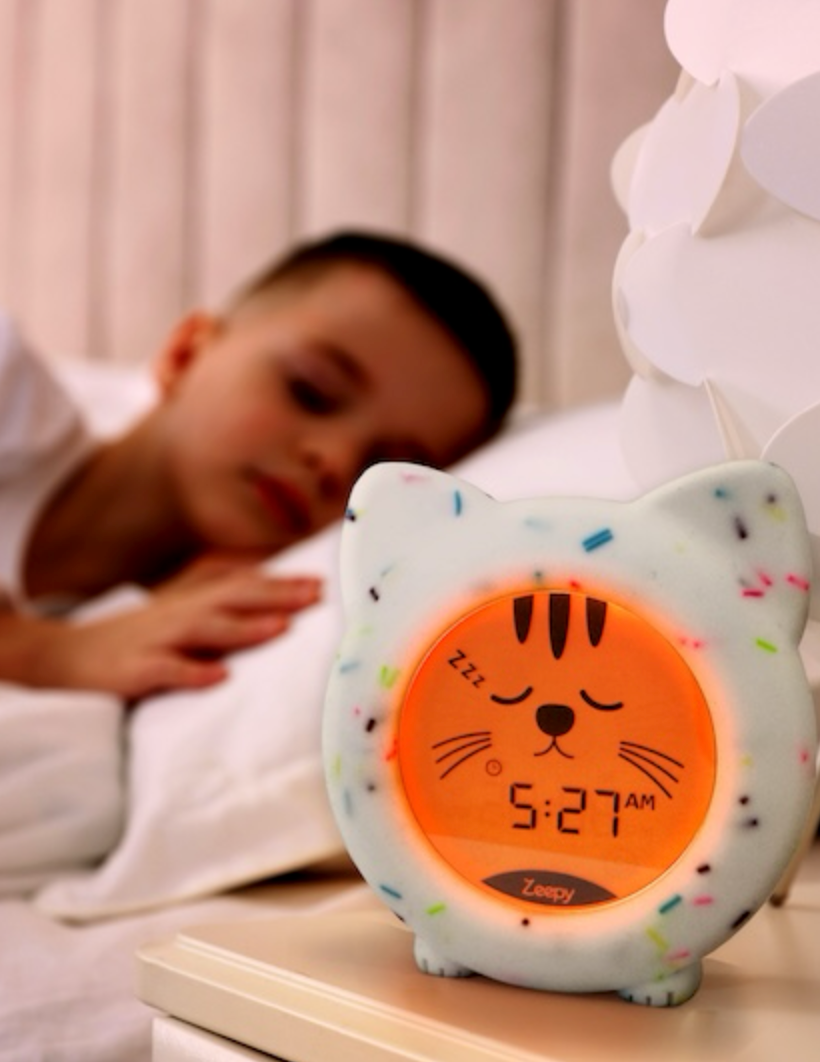
No more negotiating. No endless last-minute requests. At the end of the day, when you’ve got nothing left, the clock steps in and the routine takes over.

SET THE CLOCK TO YOUR ROUTINE
A few weeks in, and the routine starts to stick. More easy nights, fewer hard ones. There will still be wobbles, but the routine makes it easier to find your rhythm again.
Lilac. Time for calm.
Your child knows what the lilac light means—not because you told them, but because they've seen it every night before. From the app, you play a story to help them settle. Kip is here. It’s time to wind down.
Orange. Lights down.
You leave the room. The audio is still going. Quieter now, slower. Kip's still there. Your child doesn't need to call you back in.
Yellow light. Not yet.
Your child wakes early, before it's time to get up. The yellow light is on and, nearby, Kip's voice plays softly from the app. Quiet, unhurried stories from the Moonbeam Cat Café. Who's asleep, what she can hear, what the early morning feels like. Your child listens. You stay in bed.
Blue. Morning, properly.
The light changes and the morning audio begins: their reward for staying in bed. A song, a story, or a guided activity to welcome the day.


From our psychotherapist
A familiar routine is what makes bedtime feel safe. It is predictable, and that predictability is the cue your child's body and mind use to start winding down.
But a routine that never varies can become something your child depends on being followed exactly. Then a different pair of pyjamas, or the other parent doing bedtime, is enough to unsettle the whole evening.
So change something small, often. A different song, a different story, a different grown-up at the door. Gentle changes teach your child that things can move around a little and still feel safe, and telling them in advance means they are prepared rather than thrown.

The Zeepy App
Start with a 7-day free trial. The full routine from night one.