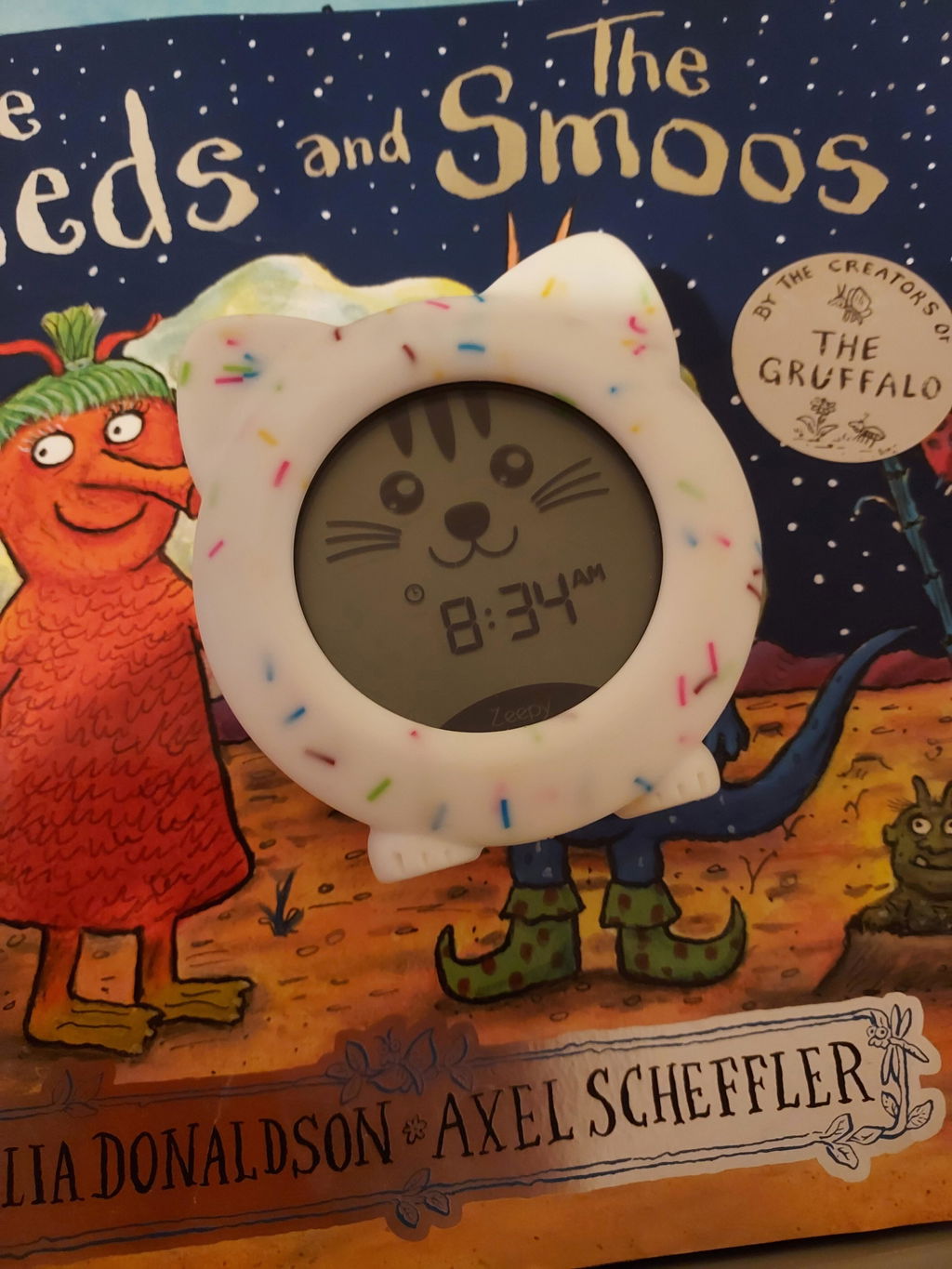
Kip and the Extra Hour
For when a clock change or a worry your child can't quite name has them searching for answers. Kip hunts under cushions and behind biscuit jars for…
0:0033:09
Free to play
At 2am on Sunday 25 October the clocks go back an hour. Nobody tells your three-year-old. So the 6:30 waker turns up at 5:30, bedtime feels an hour late to them and an hour early to you, and the routine you've spent months getting right wobbles for about a week.

Small children read the room rather than the clock — the light going, the house going quiet, the routine starting. Move the clock and those cues stop agreeing with it, so for a few days everything lands in the wrong place: early waking, a bedtime that feels late to them, naps that don't fit.
They also can't push through it the way you can. No second coffee, no pep talk. When they're tired they're tired, and at 5:30am they are wide awake.
It settles in three to seven days. What shortens it: daylight in the morning, dim light in the evening, and keeping the routine in the same order every night, even while the times move.
Move wake-up and bedtime a little later each day in the run-up — and naps along with them, if your child still naps — and by Sunday their body is already most of the way there. Put your usual times in and we'll do the arithmetic.
| Moment | Day 1 | Day 2 | Day 3 | Day 4 | Day 5 | Day 6 | Sunday, new time |
|---|---|---|---|---|---|---|---|
| Wake up | 06:42 | 06:54 | 07:06 | 07:18 | 07:30 | 07:42 | 06:30 |
| Start bedtime | 18:42 | 18:54 | 19:06 | 19:18 | 19:30 | 19:42 | 18:30 |
| Sleep time | 19:12 | 19:24 | 19:36 | 19:48 | 20:00 | 20:12 | 19:00 |
Times in the day columns are on the old clock. The last column is the same moment in your child's day, on the new time.
Your times, the checklist and what to do when it goes sideways.
We'll email you the odd bedtime thing. Nothing else, ever.
Nobody hits these times exactly. Ten minutes either way is fine — it's the direction of travel doing the work. If it falls apart on day three, pick it up from wherever you are.
Twice a year, millions of families move their children's whole routine by an hour overnight. We're campaigning it to stop changing. Tell us what the change does in your house.
Leave the clocks aloneThen don't start a five-day plan tonight. Let them stay up twenty or thirty minutes later than usual, and from Sunday morning run everything on the new clock. Children adjust either way — the gradual version just softens the landing.
Most children settle in four to seven nights, as long as the routine keeps the same shape. Two- and three-year-olds usually take longer than school-age children, and a few need closer to a fortnight. None of that is a problem.
Yes, and get some daylight into them soon after. Letting them sleep on reinforces the old rhythm and stretches the whole thing out by days.
Keep the room dark and the morning boring until the time you want the day to start. It is deeply dull, and it works — the tiredness needs a few days to rebalance.
No. Plenty of families take the hour on the chin and are fine by Wednesday. The gradual version is gentler on children who don't handle change well, and on anyone who cannot face a 5am start.
It can. A child who can't read a clock can read a colour, so a light cue gives them something to check at 5am other than you. It's one way to hold the line, not the whole answer.
The UK clocks go forward at 1am on Sunday 28 March 2027, which is the same job in reverse. The builder above does both — switch it to spring.
 Guide
GuidePractical ways to keep bedtime steady through the week the clocks change.
Read the guide →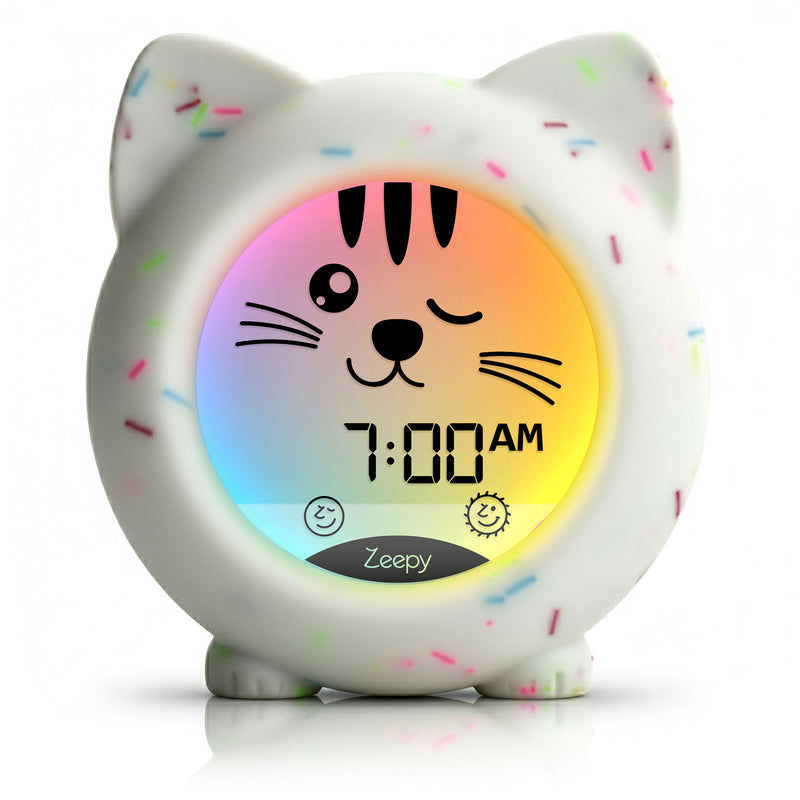 Kip the Kitty
A four-phase clock like Kip is one way to show a small child when it's time to sleep and when it's okay to get up, whatever the kitchen clock says.
Shop the clock →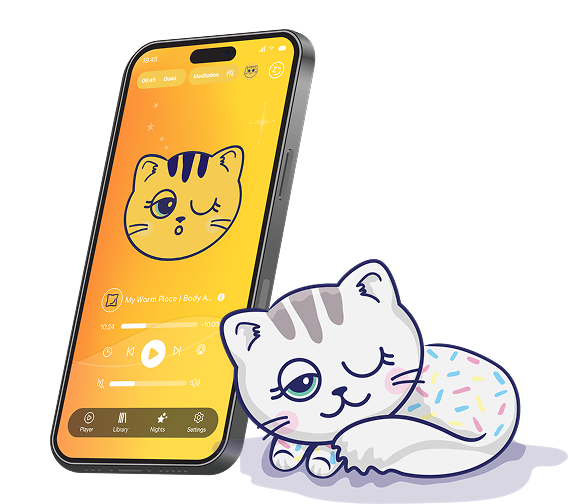 The Zeepy app
Start with a free trial. There's even a story for this week: Kip and the Extra Hour.
Get the app →For when a clock change or a worry your child can't quite name has them searching for answers. Kip hunts under cushions and behind biscuit jars for…